Sleep, materials & city living
What to Look for in a Vispring Baronet Superb Mattress
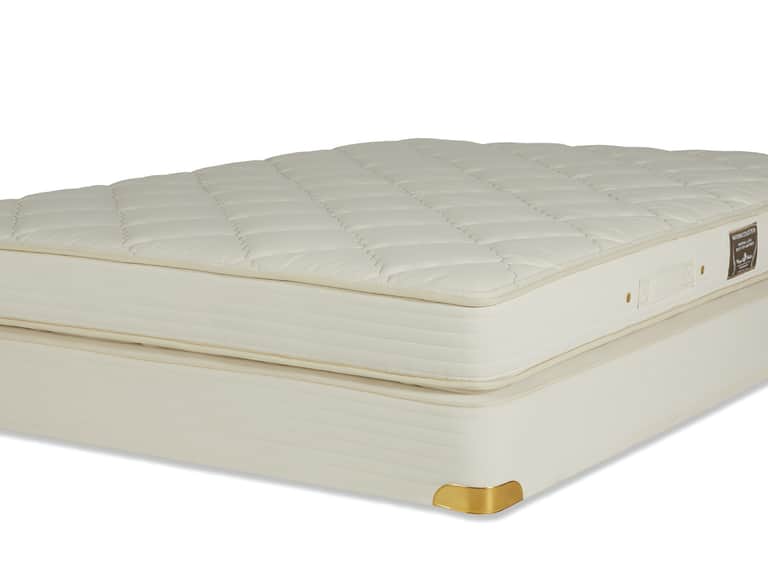
A mattress is a quiet piece of engineering: its springs, fillings, cover and foundation cooperate—or fail to cooperate—under the ordinary weight of a sleeping body. The Vispring Baronet Superb offers a useful occasion to look past a model name and ask what pocket-sprung construction actually means for support, comfort and the nightly business of staying asleep.
The mattress showroom is a place of unusually confident adjectives. Beds are described as cloudlike, orthopedic, luxurious, restorative. Some may be all of these things to someone; none of the words, by itself, tells you what will happen when you lie down at 2:14 in the morning, roll onto your side, and discover that your shoulder has been negotiating with the mattress for hours. A more useful approach is to understand the structure beneath the fabric, then compare it with your body, habits and bedroom.
The Vispring Baronet Superb is a helpful case study because its name invites an evaluation of the essentials rather than a verdict based on prestige. In considering this or any pocket-sprung mattress, examine the spring unit, the comfort layers above it, the finished surface, the degree of firmness, and the way the whole bed behaves under your weight. Specifications matter, but they are not a substitute for trying a mattress in person where possible. The purpose is not to admire a list of materials. It is to decide whether the design suits the way you sleep.
What “pocket-sprung” means
In a pocket-sprung mattress, individual springs sit in fabric pockets rather than being linked together as one continuous coil system. The intention is to let springs respond more independently to pressure. When one part of the bed is compressed, neighboring springs may move less than they would in a tightly interconnected system. That can create a more localized response, though the experience depends on the design as a whole: spring count and arrangement, spring tension, mattress size, comfort materials, and the sleeper’s build all contribute.
The phrase is not a complete description of performance. Two pocket-sprung mattresses can feel markedly different. One may have a lively, buoyant surface; another may feel more cushioned or controlled. Springs can influence how a mattress responds and how weight is distributed, but they do not independently determine whether a bed is soft, firm, supportive or comfortable. A thick or compressible comfort layer can soften the first impression. A more restrained top layer can make the spring system easier to notice.
This distinction is useful when reading information about the Baronet Superb. Rather than asking only whether it is pocket sprung, ask how the complete construction is intended to work. What is the spring unit designed to do? What materials sit above it? How do those layers change the initial feel, pressure relief and ease of movement? If a specification does not explain a feature clearly, ask for clarification instead of treating a grand-sounding term as evidence of a particular sleep experience.
Support is not the same as firmness
“Firm” is a sensation. “Support” is a question of fit. A mattress can feel firm at first contact and still allow a sleeper’s hips to sink too far; it can feel welcomingly plush while keeping the body in a comfortable, well-supported position. The words are often used interchangeably in conversation, which is one reason mattress shopping becomes confusing. They describe related but different aspects of the experience.
A useful way to think about support is whether the mattress lets the body rest in a position that feels natural and sustainable. That judgment cannot be made from a firmness label alone. Body shape, weight distribution, sleep position and personal sensitivity all matter. A side sleeper may need enough give around the shoulder and hip to avoid concentrated pressure. A back sleeper may prefer a surface that cushions the lower back without allowing the pelvis to settle excessively. Stomach sleepers often pay particular attention to whether the midsection feels adequately supported.
These are tendencies, not rules. People are not standardized test weights, and sleeping styles are not always consistent from one night to the next. A person may fall asleep on their side and wake on their back. If you share a bed, your companion’s preferences and movement may also affect the decision. The point is to start with your habitual position and the places where your current mattress feels uncomfortable, then use those observations as questions during a trial.
Comfort layers and pressure relief
Above the springs, comfort layers determine much of what the sleeper notices first. The materials and their arrangement affect how readily the surface yields, how quickly it returns, and whether pressure is spread over a broader area or remains concentrated. Natural and synthetic fillings can behave differently, but a material name alone does not establish how a finished mattress will feel. Thickness, density, quilting and construction all influence the result.
Pressure relief is especially important for people who sleep on their sides or have distinct pressure sensitivities. A surface that is too unyielding may feel as though it is pushing back at the shoulder or hip. A surface that gives too much may feel less stable or make changing position harder. The desirable balance is personal: enough cushioning to reduce uncomfortable pressure, without so much sink that the sleeper feels trapped or poorly aligned.
When assessing a Vispring Baronet Superb, investigate the comfort layers as carefully as the spring unit. Ask what materials are used, how they are layered, and what the manufacturer means when it describes the mattress’s comfort or tension. If the available specification identifies different components, consider what each is likely to contribute, while remembering that a component’s properties do not guarantee a particular result for every sleeper. The finished mattress, not an isolated fiber or spring, is what your body will meet.
A practical in-person trial
A brief perch on the edge of a showroom bed can tell you almost nothing about how it will feel after a full night. If an in-person trial is available, give yourself time. Lie down in your usual sleep position, then remain there long enough to notice whether pressure begins to build. Turn over. Try the positions you use most often, rather than the posture that looks most composed from across the room.
Pay attention to several separate sensations. Does your shoulder feel crowded when you are on your side? Does your lower back feel relaxed or held in an awkward curve? Can you move without a struggle? Does the surface feel comfortable after the first minute, and does that comfort persist? A mattress may feel impressively substantial yet not suit your particular pressure points. Conversely, a less dramatic first impression may prove more comfortable over time.
If you share the bed, test it together when practical. Notice whether one person’s movement is disruptive, whether each sleeper has enough room, and whether both people can find a comfortable position. Pocket springs are often discussed in relation to localized response, but a marketing description is not a guarantee of motion isolation. Your own experience matters. The bed frame, mattress size and the movements of the other sleeper also influence what you feel.
- Try the mattress in your ordinary sleeping positions, not just on your back.
- Stay down long enough to notice pressure, warmth and ease of movement.
- Ask for the current construction and firmness information for the exact model and size.
- Check the trial, return, delivery and warranty terms before making a decision.
- Confirm that your existing bed base is compatible and in suitable condition.
Firmness labels are a starting point
A label such as soft, medium or firm is useful as a broad comparison, but it is not a universal measurement. One maker’s medium can feel unlike another’s. Even within a single model, a sleeper’s perception changes with body weight, body shape, chosen position, bedding and the base beneath the mattress. Think of a firmness description as a map legend: helpful for orientation, insufficient to tell you what the landscape feels like underfoot.
When comparing the Baronet Superb with other mattresses, seek specific information about the model’s intended feel and available configurations rather than relying on a single adjective. If a retailer or manufacturer gives guidance on firmness, ask how it relates to the construction and who is likely to find it comfortable. Then treat that guidance as a hypothesis to test, not a promise. Your own trial should carry more weight than the vocabulary on a label.
The bed base is part of the system
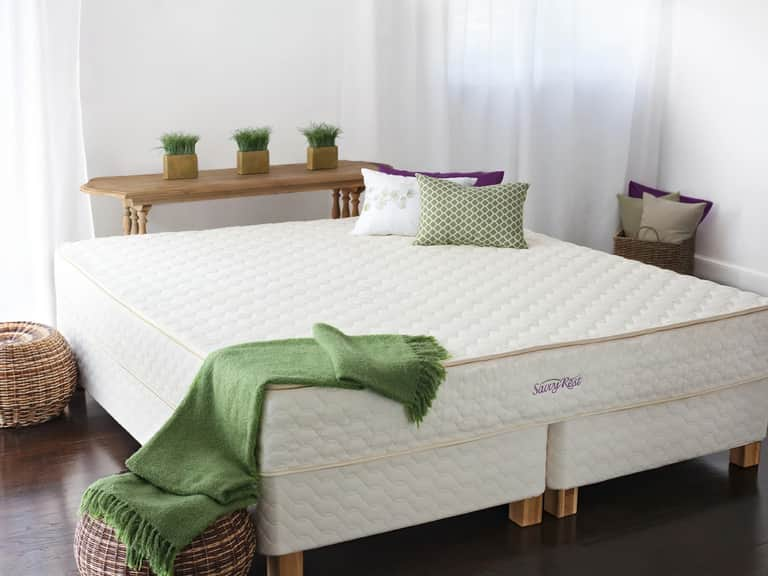
A mattress does not perform in a vacuum. The foundation or bed frame supports it, and its condition can affect the feel of the finished bed. A base that is damaged, uneven or incompatible may undermine a mattress before the sleeper has spent a night on it. Slatted frames, platform bases and other foundations can differ in their support and construction, so confirm the requirements for the specific mattress rather than assuming that any frame will do.
This is a practical matter in apartments, where bedroom dimensions, stairs, elevators and delivery access can be as consequential as the mattress specification. Measure the room, the frame and the route into the home. Check the mattress dimensions against the bed base, and consider whether the chosen size leaves enough room for movement and ordinary use. A mattress can be beautifully made and still become a logistical puzzle on a narrow staircase.
For Manhattan residents and other urban sleepers, the bedroom itself deserves a place in the decision. Room temperature, street noise, light from windows and the space available around the bed can shape the quality of sleep alongside mattress comfort. A new mattress cannot resolve every environmental disturbance, but evaluating it in the context of the room prevents the mistaken hope that one purchase will solve unrelated problems.
Materials, upkeep and durability
Construction details are also a way to understand care. Ask how the mattress should be rotated, whether it has a designated top and bottom, what kind of protector is appropriate, and which cleaning methods are permitted. Do not assume that a mattress is flippable or that its cover can be removed simply because those features are common elsewhere. Follow the care instructions for the exact model.
The warranty deserves careful reading, but it is not a measure of comfort or an assurance that the mattress will remain ideal for every sleeper for the entire coverage period. Examine what the warranty covers, what it excludes, and whether particular requirements apply to the bed base or routine care. Also ask about delivery arrangements, setup, removal of an old mattress, and any trial or exchange policy. These details are less romantic than spring counts, but they can shape the ownership experience.
Durability is similarly not captured by one impressive specification. Materials, construction, use, care and support beneath the mattress all matter. A well-made bed may still change in feel over time, and a sleeper’s needs may change as well. It is sensible to evaluate quality without assuming that a higher price or a prestigious name automatically makes a mattress the right fit. Comfort, compatibility and transparent information are more useful measures.
Questions worth asking before purchase
A good mattress conversation is specific. Instead of asking only whether the Baronet Superb is comfortable, ask what its construction is intended to accomplish, how its comfort layers interact with the springs, and whether the feel varies by size or configuration. If the answer relies mainly on broad claims, request details. A knowledgeable seller should be able to explain the product without making your decision for you.
- What is the current construction of the exact Baronet Superb model being offered?
- How is its firmness or tension described, and what does that description mean in practice?
- Which bed bases are suitable, and are there restrictions on slat spacing or foundation type?
- What are the care instructions, including rotation and cleaning?
- What are the delivery, trial, exchange, return and warranty terms?
- Can both sleepers try it, and is a different feel available if one person needs more give?
Because product specifications and policies can change, confirm details directly with the retailer or manufacturer before buying. This is especially important when comparing online descriptions, older reviews or information about similarly named models. A mattress guide can help you frame the questions; it cannot verify the exact configuration in front of you.
How to decide whether it suits you
The simplest test is not whether the Vispring Baronet Superb sounds impressive, but whether its construction and feel make sense for your own sleep. Start by recording what you want to improve: shoulder pressure, a sense of excessive sink, partner disturbance, or difficulty turning. Bring that list to a trial. A clear problem is easier to evaluate than a vague wish for a better night.
Then compare the mattress with your habitual position, preferred surface feel and the base you will use at home. Give comfort layers and support equal attention. Consider the experience of a partner if applicable, and verify practical details such as size, access, care and policies. If trying it in person is impossible, look for precise construction information and a clearly stated return or exchange process. Uncertainty is not a flaw in the shopper; it is a reason to seek better information.
The Baronet Superb is best approached as a construction to investigate, not a verdict waiting to be accepted. Pocket springs describe one part of its architecture. The comfort layers shape the first encounter; firmness language gives only a rough orientation; and the sleeper’s body supplies the final assessment. When those elements are considered together, the decision becomes less about reputation and more about fit.
That is a modest ambition, but an important one. The right mattress is not necessarily the softest, firmest, most elaborate or most expensive. It is the one that lets you rest comfortably, supports the positions in which you sleep, fits the bed and room you have, and comes with terms you understand. In the end, good mattress buying is less a matter of being persuaded than of noticing what happens when you lie down.